Medications
Semaglutide, Wegovy, Zepbound, tirzepatide
Monthly Cost
Provider visit fee varies; medication separate
Speed to Start
Fast
Est. 2014
About Push Health
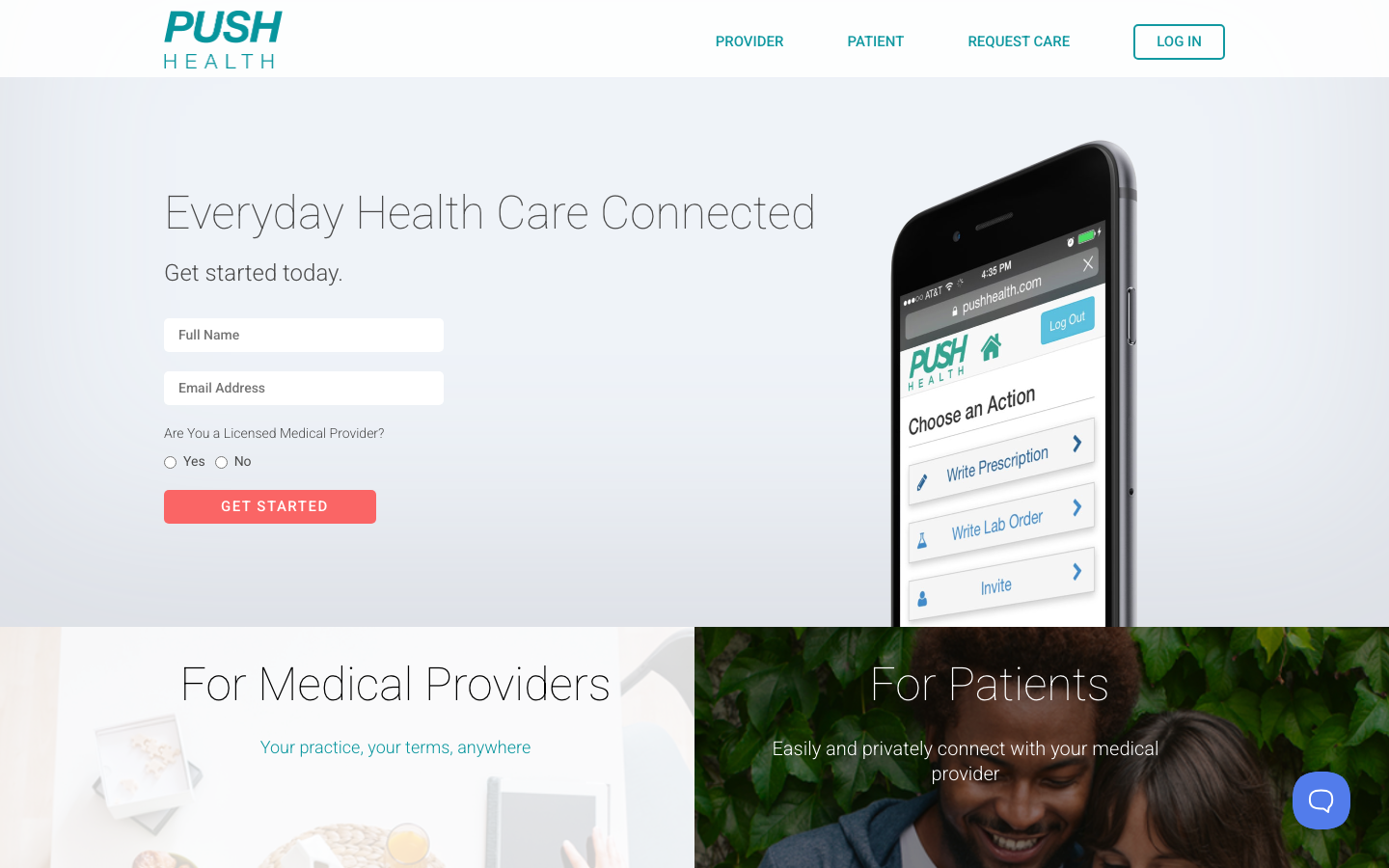
Push Health was founded in 2014 as a telehealth marketplace that connects patients directly with licensed healthcare providers for prescription services. Unlike vertically integrated platforms that employ their own physicians, Push Health operates as a connector — patients browse available providers, select one, and pay a consultation fee to receive a clinical evaluation and, if appropriate, a prescription. For GLP-1 medications, this means patients can access both compounded and brand-name options including semaglutide, tirzepatide, Wegovy, and Zepbound, depending on what the individual provider offers.
The pricing structure at Push Health is decoupled: patients pay a provider visit fee (which varies by provider, typically -0) and then pay for their medication separately through a pharmacy. This a-la-carte model can be advantageous for patients who already have a preferred pharmacy, insurance coverage for GLP-1 medications, or access to manufacturer savings programs. It can also be confusing for patients accustomed to all-inclusive pricing, as the total cost depends on which provider you select, which medication is prescribed, and how you fill the prescription.
On Trustpilot, Push Health holds a 3.7-star rating based on over 750 reviews — one of the larger independent review datasets among telehealth GLP-1 providers. This volume of reviews provides meaningful consumer sentiment data. Positive reviews frequently cite the convenience of quick prescriptions and the ability to choose your own provider, while negative reviews often mention inconsistent provider quality and limited follow-up support. The D- rating with the Better Business Bureau is a notable concern, suggesting patterns of unresolved complaints or insufficient responsiveness to BBB inquiries.
The support level at Push Health is intentionally low — the platform is designed as a prescription access point, not a comprehensive weight management program. There are no integrated dietitians, no meal plans, no behavioral coaching, and no lab testing built into the platform. Patients receive a clinical consultation, a prescription if appropriate, and then manage their own care. For experienced patients who know what medication they want and simply need a licensed provider to evaluate and prescribe it, this streamlined approach is efficient. For patients new to GLP-1 therapy who need guidance on titration, side effects, and lifestyle changes, the lack of wraparound support is a genuine limitation.
Push Health occupies a unique position in the market as a high-flexibility, low-support prescription marketplace. The breadth of medication options (compounded and brand-name, semaglutide and tirzepatide) is among the widest we have reviewed. The Trustpilot review volume provides a level of consumer transparency that many competitors lack. But the marketplace model means your experience depends heavily on which provider you select, and the D- BBB rating warrants careful consideration. Push Health is a tool for savvy patients who value choice and autonomy over hand-holding — not a program for those seeking comprehensive weight management support.
Push Health GLP-1 Medications
At a Glance
Medications Offered
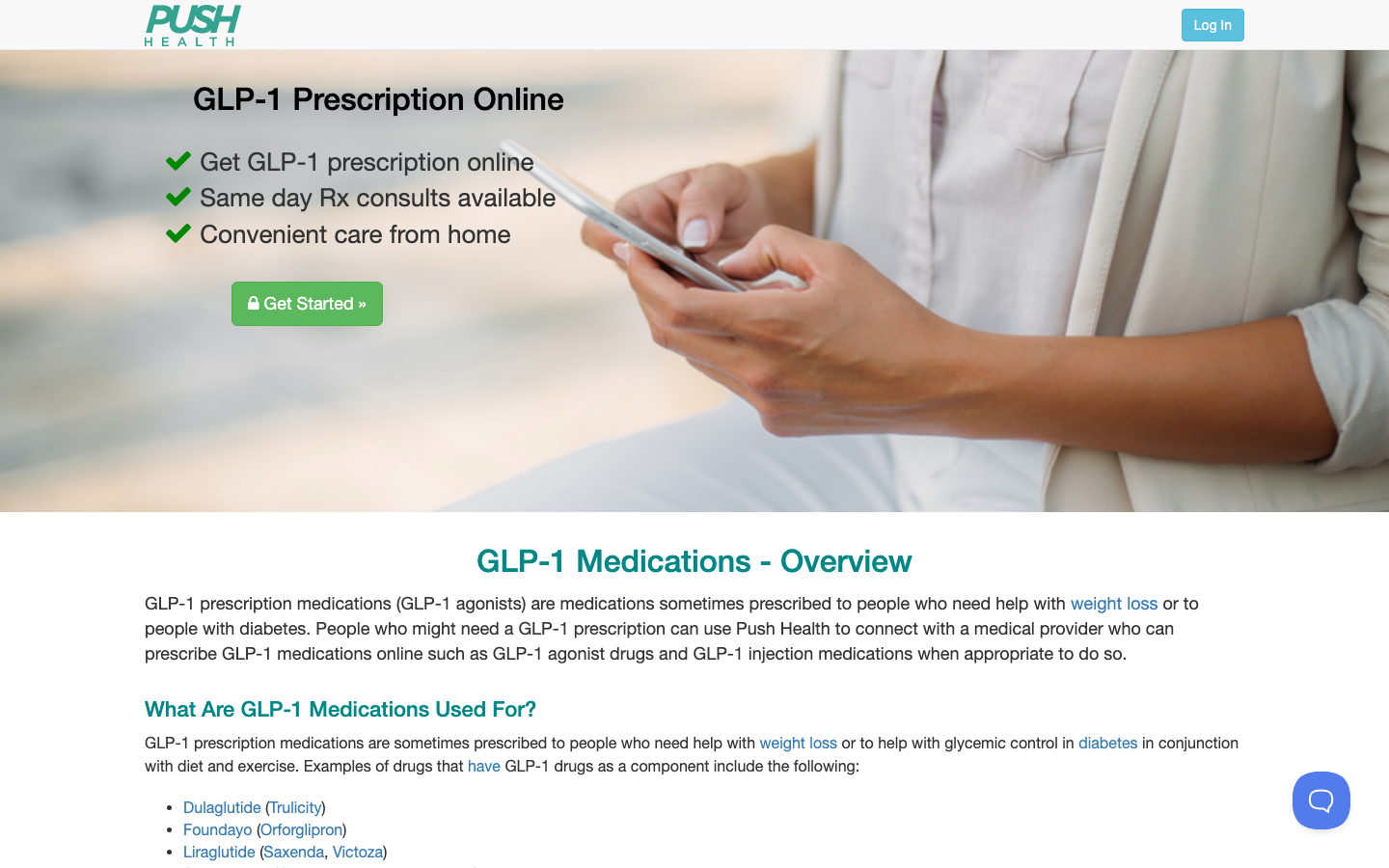
Semaglutide, Wegovy, Zepbound, tirzepatide
Both
Cost & Insurance
- Monthly: Provider visit fee varies; medication separate
- 6-month estimate: Varies by provider, pharmacy, and medication
- Insurance: Varies by external provider/pharmacy
- Self-pay: Yes
Clinical Features
- Lab testing: No
- Dietitian access: No
- Verified Pharmacy: Marketplace model — patient connects with providers who use various pharmacies
- BBB Rating: D-
Delivery & Access
- Format: Subcutaneous
- Nationwide telehealth: Yes
- Speed: Fast
- Spanish-speaking providers: Not available
What the Push Health Request Looks Like
Push Health uses a model that doesn’t appear elsewhere in our catalog: a patient-driven medication request. Rather than a wizard that walks the patient through clinical questions and recommends a treatment, Push Health asks the patient to name the medication, dosage, and quantity they want — and a licensed provider then reviews the request and either approves or denies it. The whole flow is a single long form titled “Request Care in 4 Easy Steps.”
Strong on the FDA black-box and suicidality fronts (MTC and MEN syndrome named with personal and family framing, suicidality named as a direct yes/no), but the model leans heavily on patient free-text and patient-named medication requests. Screening quality depends on patient honesty and recall rather than structured options. No diet/lifestyle, no pregnancy, no eating disorder, no race/ethnicity.
Among the lowest in our catalog. Single-form flow, low $69.99 pre-authorization charged only if a provider issues a recommendation, no subscription, no membership, patient-selected pharmacy, and a model that bypasses the wizard fatigue of typical GLP-1 funnels. The trade-off is that the patient does the prescribing legwork — naming the drug, dosage, and quantity themselves.
The 4 Sections
Push Health is structurally closer to a digital fax-Rx-request service than a traditional clinical intake. The patient names the medication they want — for example “Wegovy 0.25mg, 1 pen, 4-week supply” — and a licensed provider in the patient’s state reviews the request alongside the safety screen answers, then either approves and writes the prescription to the patient’s chosen pharmacy, or denies the request. The model assumes the patient already knows what medication they want; it does not curate options or recommend an alternative.
Two things stand out in Push Health’s safety screen. First, suicidality is asked as a direct yes/no question — “Has the patient ever had a psychiatric condition or thoughts of suicide?” — rather than buried inside an unrelated multi-select. Second, both thyroid cancer and Multiple Endocrine Neoplasia syndrome are named explicitly with personal-and-family framing, alongside a combined “gallbladder, pancreas or kidney problems” question. For a 4-screen flow, the FDA black-box coverage is competitive with much longer wizards.
No structured comorbidity multi-select — diabetes, hypertension, hyperlipidemia, sleep apnea are bucketed into the free-text “past medical problems” field. No eating-disorder screen. No alcohol or tobacco/nicotine question, no quantity or frequency for substance use. No pregnancy or breastfeeding screen. No diet or exercise history. No race or ethnicity capture. No language preference. No BMI eligibility check against a real-time threshold. No phone OTP verification, no government ID upload. The thyroid-cancer question does not distinguish medullary specifically from other thyroid cancers — it asks generically. Heavy free-text reliance means screening depends on patient honesty and recall.
The $69.99 pre-authorization is held only as a pending charge and only settled if a provider provides a consultation and recommendation — meaning if the request is declined or never reviewed, the patient pays nothing. The medication itself is paid directly to the patient-selected pharmacy at the patient’s existing cash-pay or insurance rate, which means a savvy patient can shop for the lowest pharmacy price (Walmart Pharmacy, Costco Pharmacy, manufacturer programs) and save substantially. There is no membership fee, no recurring subscription, and no upsell. The $69.99 is the platform’s entire economic relationship with the patient.
Source: GLP-1.Reviews editorial walkthrough on April 29, 2026. We completed every section of the Push Health weight-loss request form using a representative GLP-1 candidate persona and stopped before submitting the $69.99 pre-authorization payment.
Opens pushhealth.com in a new tab. We may earn a commission if you start treatment through this link, at no additional cost to you.
Start your GLP-1 weight loss journey with Push Health today
Medical Disclaimer: This review is for informational purposes only and does not constitute medical advice. GLP-1 medications are prescription drugs that should only be used under the supervision of a licensed healthcare provider. Individual results may vary.
Editorial Independence: GLP-1.Reviews maintains full editorial independence. Our scores are based on verified data and standardized criteria.