Is Maximus legit and worth it?
Maximus is a real GLP-1 telehealth provider; we read its site and scored it 3.6/5 in our independent review (Strong Access, Watch the Trust Signals). It is best for patients prioritizing access, microdose flexibility, and intro pricing who can tolerate opaque pharmacy sourcing and rigid post-shipment refund terms. Biggest plus: Both semaglutide and tirzepatide — plus oral, sublingual, and microdose options. Watch-out: Compounding pharmacy partners not publicly disclosed.
Scorecard: strongest in Access (4.5/5) and Cost & Value (4.0/5); weakest in Trust & Transparency (2.5/5) and Patient Protection (2.5/5).
Medications
Compounded semaglutide & tirzepatide (injection, oral, sublingual; microdose) (as entered 1 May 2026; capture date not recorded)
Monthly Cost
$79.99 – $399 (as entered 1 May 2026; capture date not recorded)
Speed to Start
Fast (async)
Prices and medications in this review are as entered in our research on 1 May 2026 (the date we captured them was not recorded), unless a line is marked otherwise, and have not been re-checked since. Note added 13 October 2026.
Corrected 14 October 2026: this review previously gave a Better Business Bureau rating or listing status. We kept no record of where it came from, so it has been removed. Trustpilot figures in this review are as recorded in May 2026 and have not been re-checked.
Est. 2020
About Maximus
Maximus launched in 2020 as a men’s hormone-optimization brand built around enclomiphene and oral testosterone protocols, then expanded into compounded semaglutide and tirzepatide as the GLP-1 weight-loss category exploded. The company was founded by Dr. Cam Sepah, a clinical psychologist (PhD, UCLA) and former founding Medical Director at Omada Health, and raised a $15 million Series A in 2022 from Founders Fund and 8VC. Despite the male-coded branding, the GLP-1 protocol is open to all genders, and a meaningful share of Maximus’s weight-loss patient base is female.
Pricing on Maximus is unusually flexible for a compounded provider. The microdose protocol — a once-weekly low-dose injection designed for patients with a BMI under 25 who want appetite or metabolic benefits without aggressive weight loss — starts at $79.99 per month, the lowest entry point in our entire compounded directory. Standard weight-loss tiers run from $99.99 per month for a 6-month semaglutide bundle to $399 per month for top-tier tirzepatide on a month-to-month plan, with multi-month “Starter Pack” pricing in between. Maximus also offers oral tablets and sublingual drops for both molecules — a meaningful departure from the inject-only orthodoxy of most compounded providers.
The clinical model is asynchronous: a 19-screen intake captures goals, demographics, comorbidities, FDA black-box contraindications (MEN1 / MEN2, medullary thyroid), and an eating-disorder screen, then routes the case to a US-licensed prescriber from the in-house Maximus Medical Group. Live video visits are available as a $28-$35 add-on. Lab testing is not included in the GLP-1 subscription — patients who want a baseline panel pay $199.99-$349.99 per year for full Quest or Tasso at-home draws, or roughly $70 for the abbreviated CLIA kit when required for a specific protocol.
Where Maximus stumbles is on transparency and refunds. Its Trustpilot rating is strong — 4.4 stars across 990+ reviews. Maximus also does not publicly disclose its compounding pharmacy partners, which is increasingly out of step with peers like OrderlyMeds, whose FAQ names PerfectRx/PerfectionRx, ProRx, Casa, Pharmacy Hub and SmartPharmaRx. Refund policy is restrictive: nothing is returned once medication ships, and multi-month plans cancelled mid-term convert to non-expiring credit rather than cash refunds.
Corrected 13 October 2026. An earlier version of this paragraph said OrderlyMeds names Belmar, Strive, Epiq and Casa Pharma. Those four are the list published by BreezeMeds, Synergy RX and CareBareRx. OrderlyMeds’ FAQ names a different set, given above. That was our error.
For the right patient — someone who values fast async access, microdose flexibility, oral and sublingual options, and the low intro pricing, and who is willing to accept the trade-off of opaque pharmacy sourcing — Maximus is one of the most full-featured compounded GLP-1 platforms on the market. For patients who weight pharmacy transparency, validated mental-health screening, and refund flexibility above all else, the trade-offs are real and worth considering before locking into a multi-month plan.
At a Glance
Medications Offered
Semaglutide, Tirzepatide (as entered 1 May 2026; capture date not recorded)
Compounded — Inj / Oral / Sublingual / Microdose
Cost & Insurance
- Monthly: $79.99 – $399 (as entered 1 May 2026; capture date not recorded)
- 6-month estimate: $1,050 – $2,394 (as entered 1 May 2026; capture date not recorded)
- Insurance: No (HSA / FSA accepted)
- Self-pay: Yes
Clinical Features
- Lab testing: Optional add-on ($199.99-$349.99/yr)
- Dietitian access: Group only (Discord community)
- Pharmacies named: Not publicly disclosed
Delivery & Access
- Format: Subcutaneous, Oral, Sublingual
- Nationwide telehealth: Yes (50 states + DC)
- Speed: Fast (async, days to ship)
- Spanish-speaking providers: Not advertised
Maximus GLP-1 Medications
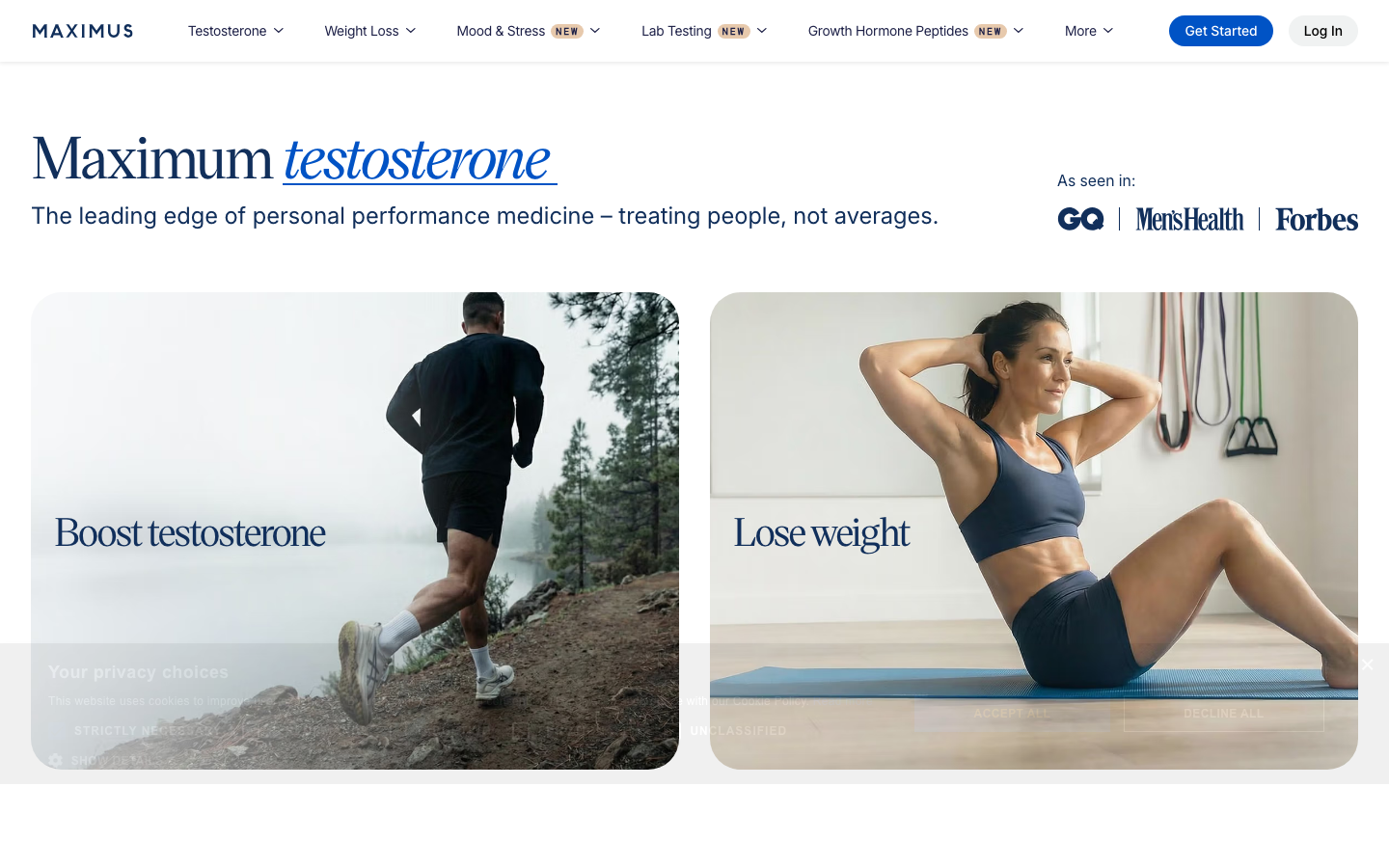
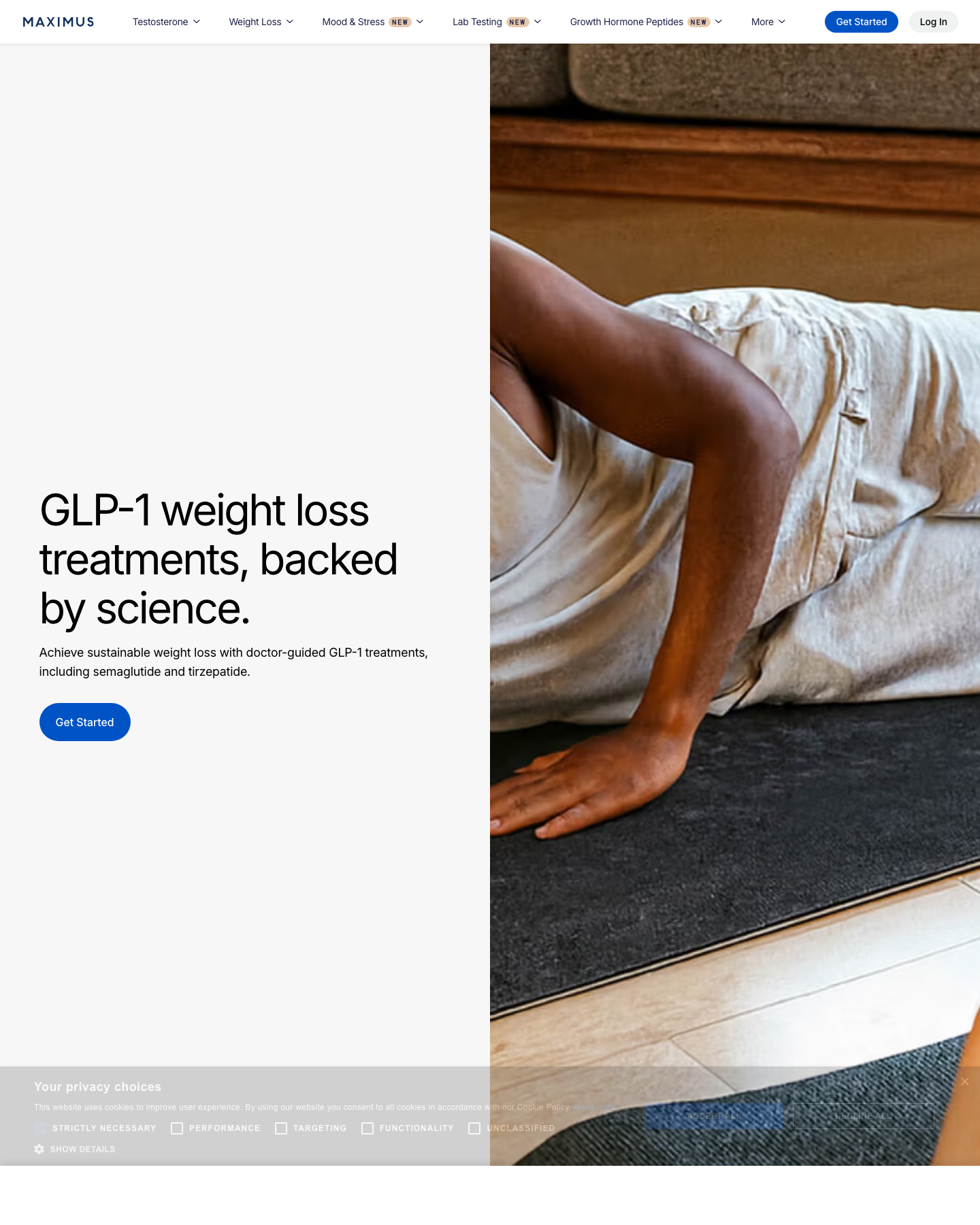 Screenshot of Maximus, captured by 1 May 2026
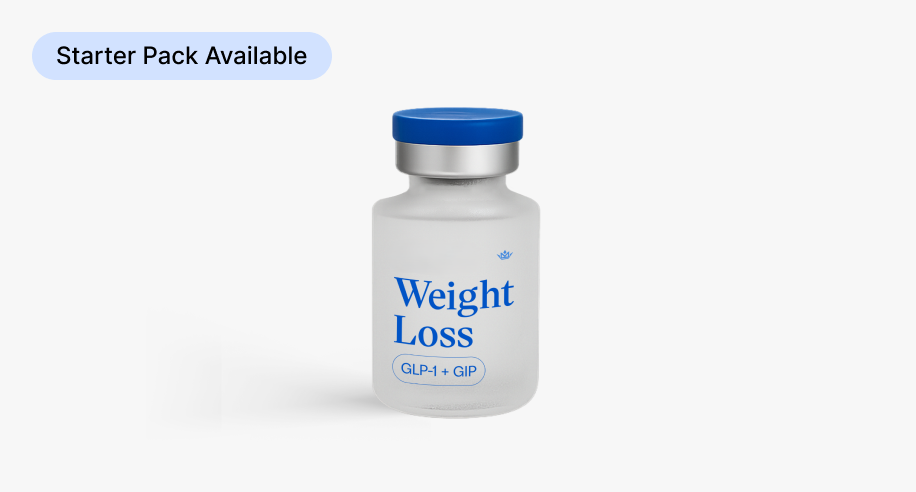 Screenshot of Maximus, captured by 1 May 2026
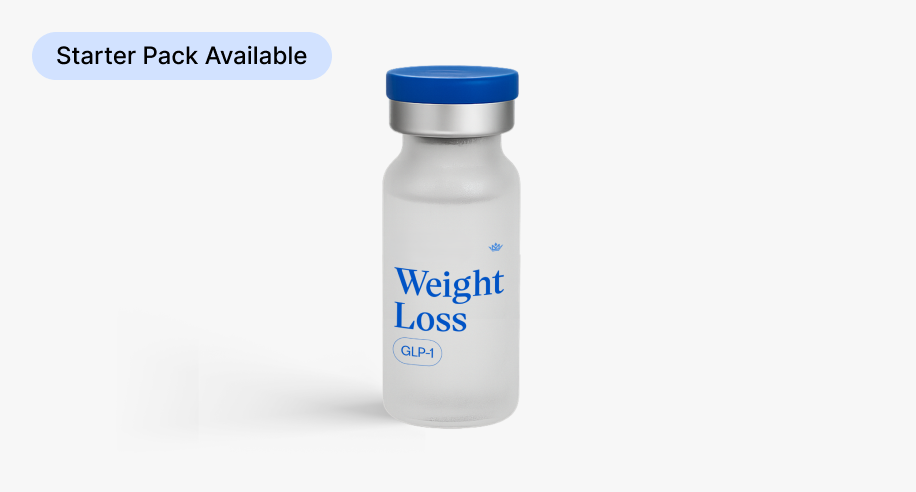 Screenshot of Maximus, captured by 1 May 2026
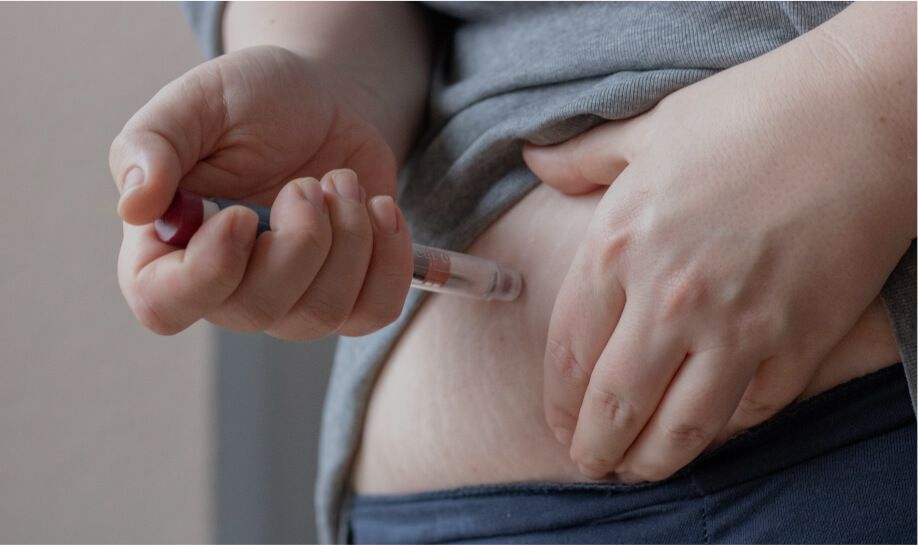 Screenshot of Maximus, captured by 1 May 2026
 Screenshot of Maximus, captured by 1 May 2026
Start your GLP-1 weight loss journey with Maximus today
Medical Disclaimer: This review is for informational purposes only and does not constitute medical advice. GLP-1 medications are prescription drugs that should only be used under the supervision of a licensed healthcare provider. Individual results may vary.
Editorial Independence: GLP-1.Reviews maintains full editorial independence. We read providers’ own pages and public records and publish what we find, with the date we checked.
Corrected 13 October 2026: this review showed a “Verified Provider” badge and said our scores were “based on verified data and standardized criteria”. Neither described a check we had done, so both have been removed.
What the Maximus Intake Looks Like
We walked through Maximus’s full GLP-1 intake ourselves, from the weight-loss goal selector and BMI calculator through the FDA black-box contraindications screen, the founder bio interlude, and the dual protocol picker (Weight Loss vs. Microdose, then Tirzepatide vs. Semaglutide), all the way to the Klarna-enabled checkout. Here’s what an actual prospective patient encounters before being prescribed.
/ 10
Two strong multi-selects: a cardiometabolic comorbidity panel (hypertension, hyperlipidemia, gout, sleep apnea, T1D, lymphedema) and a contraindications screen explicitly naming MEN1 / MEN2, MTC, pancreatitis, gastroparesis, eating disorders, kidney disease, and triglycerides over 600 mg/dL. A discrete nausea-tolerance screen (“None / Mild / Moderate / High”) is unusual and adds clinical signal. Knocked down by no validated PHQ depression screen, no substance or alcohol panel, no family-history ask, no allergy capture, and no diet or exercise history.
/ 10
Notably low. No early email gate, no ID upload, no phone OTP. A founder-bio interlude (Dr. Cam Sepah) appears mid-flow as social proof rather than as a friction point. The protocol is selected after the medical screen but before account creation, and Klarna BNPL is offered alongside G Pay and card at checkout. A “Building Blocks” vitamin upsell ($49/mo) is pre-checked at checkout — easy to miss.
The 5 Stages
Clinical Safety Screens Performed
No validated PHQ-2 or PHQ-9 depression screen and no self-harm question. Eating disorders are a single contraindication checkbox rather than a graded screen. No substance-use or alcohol panel at all. No family-history capture for MTC, MEN2, pancreatic cancer, or other heritable risks — only personal history. No allergy check, no current-medications list, and no past-surgery free-text. No diet or exercise history. Sex is captured as Male / Female only, and there is no ID verification or phone OTP at any point in the flow. Account creation is implicit at payment, which means a patient can complete the entire medical screen without identifying themselves.
At the treatment-plan summary screen, Maximus presents a “Building Blocks” supplement pack — Vitamin D3, Magnesium, Zinc, and Chromium positioned as nutrient-gap support during GLP-1 therapy — at $49/mo. The toggle is pre-checked by default, and the add-on ships for the duration of the protocol. Patients who don’t want it must actively uncheck before clicking through to G Pay / Klarna / card. The “Due Today” line item updates accordingly, but the upsell is easy to miss in the rhythm of clicking forward through the flow.
Source: GLP-1.Reviews editorial walkthrough on April 30, 2026. We completed every screen of the Maximus weight-loss intake using a representative GLP-1 candidate persona and stopped before submitting any payment information.
Opens maximustribe.com in a new tab. We may earn a commission if you start treatment through this link, at no additional cost to you.