
Category: Comparison
Quick Verdict: Versatile and Lifestyle-Dependent
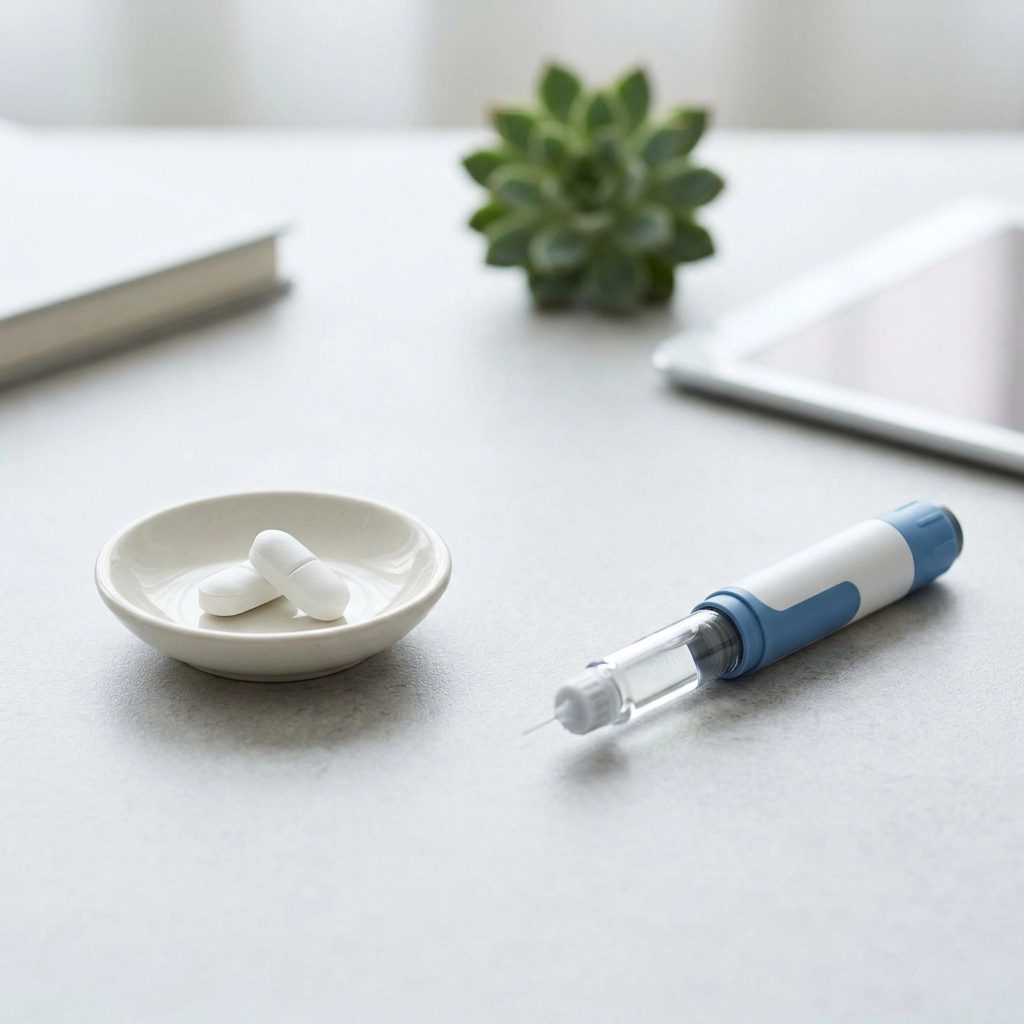
When choosing between glp 1 pills and injections, the “best” option isn’t universal: it’s about which routine you can actually stick to. Injections currently lead the pack in raw weight loss percentages and clinical potency, while the glp 1 pill form offers unmatched convenience for travelers and those with a genuine aversion to needles.
| Feature | Score | Qualitative Verdict |
|---|---|---|
| Weight Loss Potency | 9.5/10 | Heavy Hitter (Injections) |
| Lifestyle Convenience | 7.0/10 | High Maintenance (Pills) |
| Travel Friendliness | 9.0/10 | Seamless (Pills) |
| Dosing Simplicity | 8.5/10 | Set & Forget (Injections) |
Where to buy: Consult with a healthcare professional to determine which glp1 meds are available via prescription for your specific health profile.
Introduction: The New Era of GLP-1 Meds
For years, the world of GLP-1 (glucagon-like peptide-1) receptor agonists was synonymous with the weekly “sting.” If you wanted the metabolic benefits of these powerhouse medications, you had to get comfortable with subcutaneous needles. However, the landscape has shifted. With the emergence of glp 1 pills, patients now face a genuine fork in the road.
Choosing between a daily tablet and a weekly injection isn’t just about whether you like needles. It involves understanding complex bioavailability, metabolic absorption, and how much you value your morning coffee. In this deep dive, we’ll break down the science and the daily reality of these two delivery methods to help you decide which path fits your life.
1. The Science of Delivery: Why the Dose Matters
The most striking difference between glp1 meds in pill form versus injection is the dosage on the label. If you look at an injectable pen, the dose might be as low as 0.25mg or 2.4mg. Flip over a bottle of glp 1 pills, and you’ll see numbers like 7mg, 14mg, or even higher in clinical trials.
Bioavailability is the key.
When you inject a medication into the fatty tissue, it bypasses the harsh environment of the digestive system. Injectable GLP-1s boast a bioavailability of roughly 94%. This means almost every drop of the medication enters your bloodstream to start working on your insulin receptors and brain signaling.
The glp 1 pill form has a much harder journey. Your stomach acid is designed to break down proteins: and GLP-1 is essentially a protein. To survive this, pills use an absorption enhancer called SNAC (salcaprozate sodium). Even with this “shield,” only about 1% to 2% of the medication actually makes it into your system. This is why the oral doses are so much higher; the manufacturer has to “overload” the pill just to ensure a tiny fraction gets the job done.
2. Clinical Effectiveness: Which One Packs More Punch?
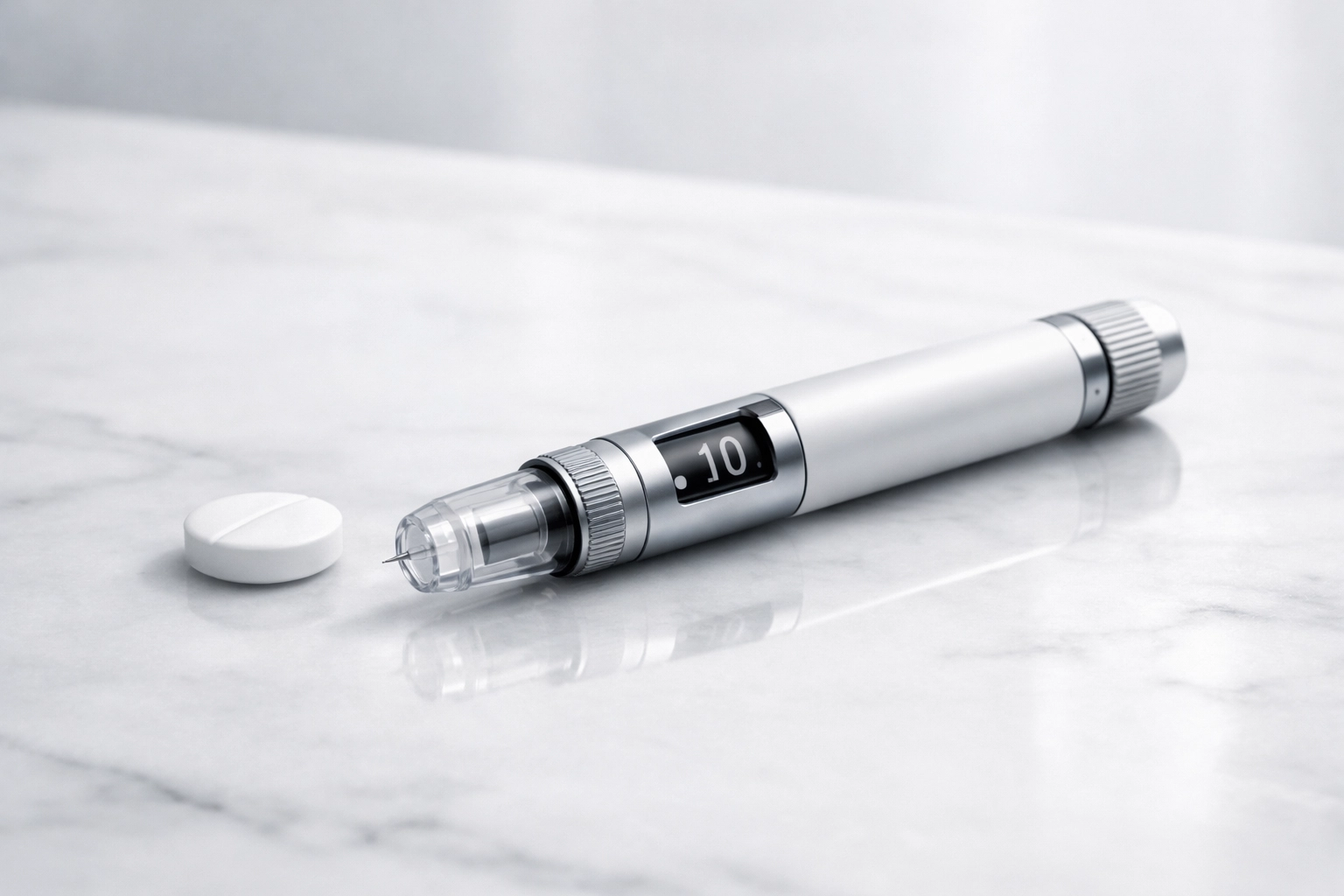
If we are looking strictly at the data from clinical trials, both versions of these glp1 meds are highly effective, but injections still hold a slight edge in total weight loss and A1C reduction.
- Injectable Results: In major clinical trials, participants using high-dose injections often see weight loss ranging from 15% to 20% of their total body weight over 68 weeks. The steady, high-bioavailability flow of the drug allows for consistent appetite suppression.
- Pill Results: Oral versions are no slouch, often achieving 10% to 15% weight loss in similar timeframes. While slightly lower than the top-tier injectables, these results still far outperform traditional weight loss medications from previous decades.
For most patients, the “effectiveness gap” is small enough that lifestyle factors become the deciding weight in the scale. If you are interested in the hardware used to track these health metrics, check out our gadgets reviews.
3. The Daily Routine: Flexibility vs. Rigidity
This is where the rubber meets the road. How do you want to interact with your medication every day?
The Case for Injections (The Weekly Ritual)
Injections are typically a once-weekly affair. You pick a “shot day” (let’s say Sunday morning), click the pen, and you’re done for seven days.
- Pros: No need to think about it for the rest of the week. No food restrictions around the time of the shot.
- Cons: Requires refrigeration (usually), meaning travel requires a cooled carrying case.
The Case for Pills (The Daily Discipline)
Glp 1 pills require a very specific morning routine. Because they are so hard to absorb, you must take them:
- First thing in the morning.
- On a completely empty stomach.
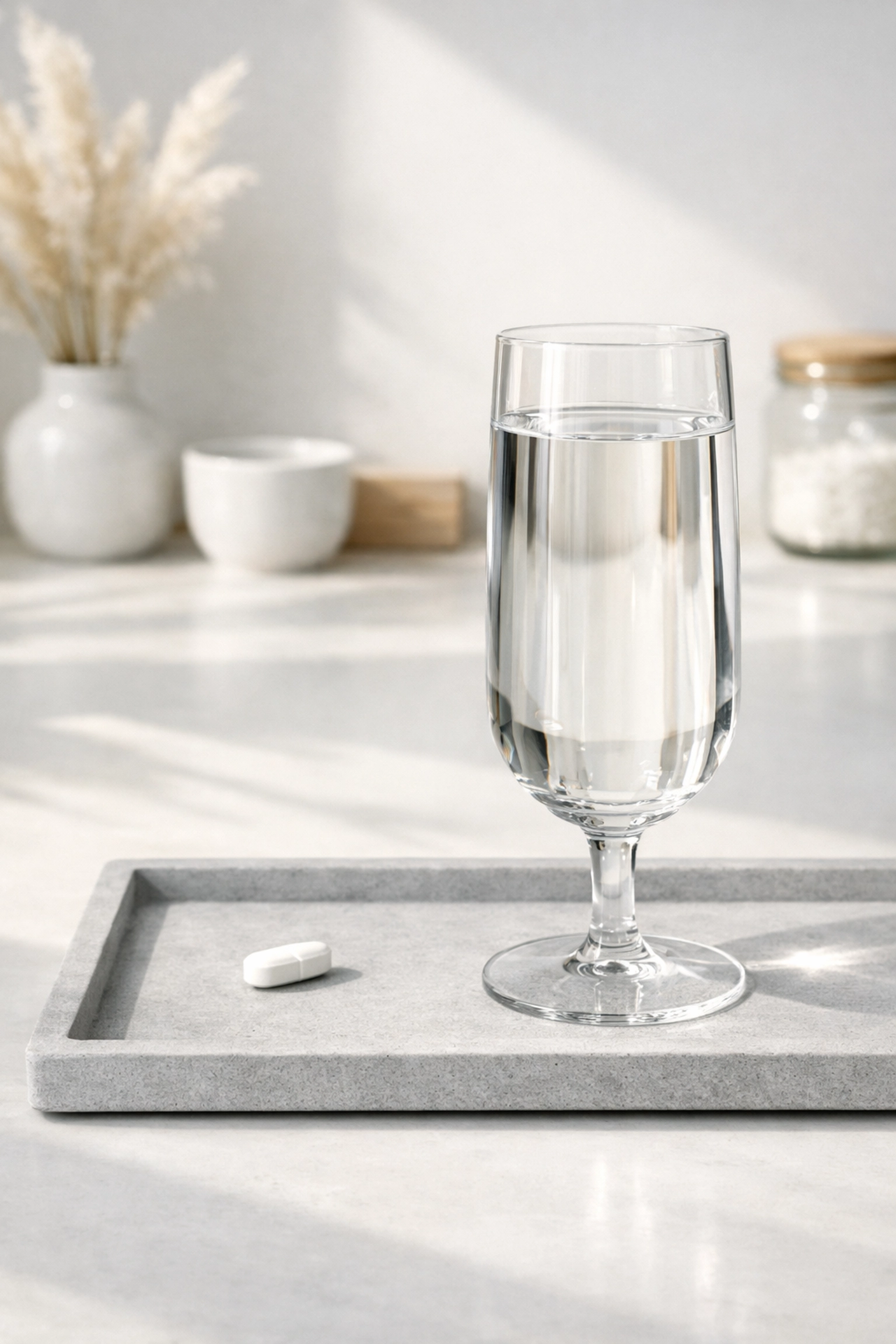
- With no more than 4 ounces of plain water.
- At least 30 to 60 minutes before eating, drinking coffee, or taking other medications.
If you are a “wake up and immediately drink a latte” person, the glp 1 pill form might feel like a significant burden. If you miss that 30-minute window or drink too much water, the medication may not work at all that day.
4. Side Effects and Tolerance
Whether it’s a pill or a shot, glp1 meds work by slowing down your gastric emptying (how fast food leaves your stomach). This is why you feel full longer, but it’s also the source of the primary side effects: nausea, bloating, and occasional “sulfur burps.”
- Injection Side Effects: Often peak 24–48 hours after the weekly shot. Some users report a “rollercoaster” effect where nausea is high on Monday but fades by Friday as the medication levels dip slightly.
- Pill Side Effects: Tend to be more consistent day-to-day because you are introducing the drug to your system every 24 hours. Because the pill sits directly in the stomach to be absorbed, some users report higher rates of localized indigestion or heartburn compared to the injection.
5. Criteria Ratings
We’ve broken down these two delivery methods across four critical categories to help you visualize the trade-offs.
Effectiveness (Weight Loss & Blood Sugar)
- Injections: 10/10 – The gold standard for potency.
- Pills: 8/10 – Very effective, but slightly lower absorption translates to slightly slower results for some.
Ease of Use
- Injections: 9/10 – Once a week is hard to beat for convenience.
- Pills: 6/10 – The strict morning fasting requirements can be a “dealbreaker” for those with hectic schedules.
Travel & Portability
- Injections: 5/10 – Managing cold chains and needles in airports is a hassle.
- Pills: 10/10 – Just toss the bottle in your bag and go. No refrigeration required.
Patient Comfort
- Injections: 7/10 – Modern needles are tiny (hair-thin), but “needle phobia” is a real psychological barrier for many.
- Pills: 9/10 – It’s just a tablet. Familiar and non-threatening.
Pros and Cons: A Quick Glance
Injectable GLP1 Meds
- Positives:
- Highest clinical efficacy.
- Once-weekly dosing (low “mental load”).
- No morning fasting requirements.
- More predictable absorption.
- Negatives:
- Requires needles and sharps disposal.
- Must be refrigerated.
- Can have a “peak and valley” side effect profile.
GLP 1 Pill Form
- Positives:
- No needles or injection site reactions.
- Stable, room-temperature storage.
- Easy to take while traveling.
- Daily routine may help some stay mindful of their health goals.
- Negatives:
- Extremely strict morning timing.
- Lower bioavailability.
- Can cause more direct stomach irritation.
- Must wait to drink coffee or eat breakfast.
See Also: Managing Your Health Data
Choosing the right medication is only half the battle. Many users find that tracking their progress with high-end tech makes the journey more manageable. You might want to look into our Apple Series review for fitness tracking, or even our Bose vs Beats comparison to find the best headphones for your new walking routine.
Who Should Choose Which?
The “Jet-Setter” Profile:
If you spend half your life in hotels or on airplanes, glp 1 pills are likely your best friend. Not having to worry about a “fridge in the room” or explaining needles to TSA agents is a massive quality-of-life win.
The “Busy Parent” Profile:
If your mornings involve a chaotic rush of making school lunches and drinking coffee while standing over the sink, the pill’s 30-minute fasting rule might be impossible. Injections offer a “set it and forget it” solution that doesn’t interfere with your morning survival routine.
The “Result-Oriented” Profile:
If your primary goal is the absolute maximum weight loss possible and you don’t mind a tiny needle once a week, the injections are the scientifically superior choice.
Conclusion: The Final Verdict
In the battle of glp 1 pills vs. injections, there is no loser: only different tools for different lifestyles. The glp 1 pill form has successfully democratized access to these life-changing glp1 meds, removing the “needle barrier” that kept many away. However, the injectable route remains the heavyweight champion of efficacy and simple weekly scheduling.
Ultimately, you should discuss your daily habits with your doctor. If you can’t commit to the 30-minute morning fast, the pill will fail you. If you can’t handle the sight of a needle, the injection will fail you. The “best” medication is the one you take consistently.
For more deep dives into the latest health and tech trends, visit our homepage or check out our sample page for a look at how we structure our reviews.
Final Score Summary:
- Best for Potency: Injections
- Best for Travel: Pills
- Best for Routine-Lovers: Pills
- Best for the “Busy & Forgetful”: Injections
Article by Justin Boggs, CEO of GLP-1 Reviews.